 Subscribe Now



Word on the street > The AE CEO’s Odyssey; Growing Your Firm Is One Thing. Paying for It Is Another.
Word on the Street: Issue 297
Weekly real-time market and industry intelligence from Morrissey Goodale firm leaders.
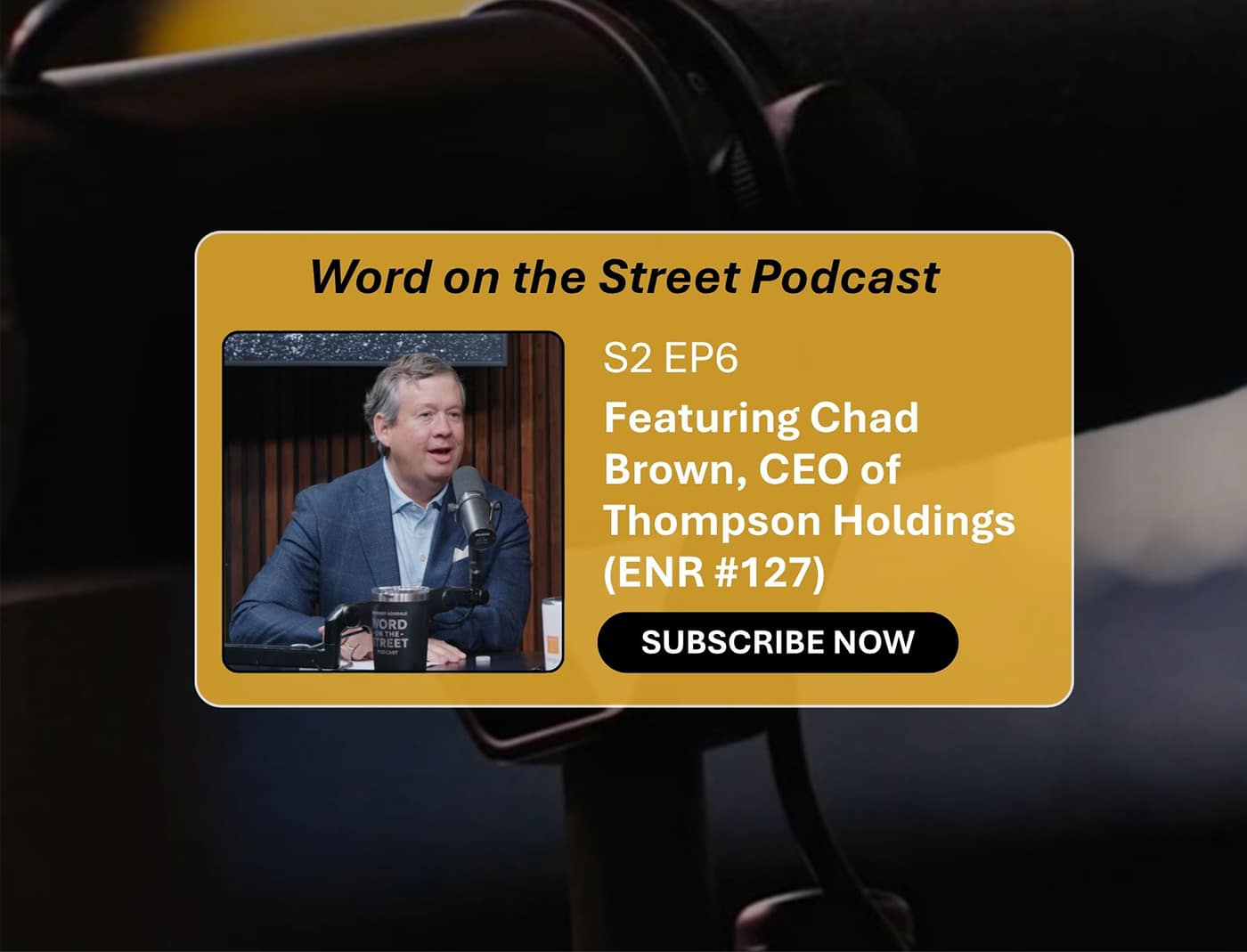
The AE CEO’s Odyssey

It’s been a couple of years since I wrote about the Odyssey and its relevance for AE industry CEOs (“Between Scylla and Charybdis: 3 Perilous CEO Choices”). But the release of Christopher Nolan’s movie got me thinking about it again. And here’s a theory you won’t find in any classics seminar (well, not in any of the legitimate ones): The number one reason it took Odysseus 10 years to get home from Troy (it’s only 565 nautical miles to Ithaca!) is that he didn’t have a chief operating officer worth the title. It wasn’t that Poseidon’s grudge was so enduring. Or the unfavorable weather. Not the Sirens nor the Lotus-Eaters. All of these were challenges that could have been either anticipated or handled by a trusted, competent partner running operations.
Odysseus’s Achilles’ heel (yup, I went there) was a C-suite staffing gap. (Thanks a lot, ancient version of ZipRecruiter.) Odysseus lacked a trusted, effective right-hand man—or as the Hellenists refer to him “a Γενικός Διευθυντής Επιχειρήσεων”—equal to the tasks and challenges his voyage kept throwing at him. Put a real COO on one of those 12 ships, someone he trusted and who could actually run the operation, and I’d wager he’s dropping anchor in Ithaca and having dinner with Penelope and Telemachus in 48 months max. Instead, he wasted a decade improvising, freelancing, learning on the job, and cleaning up disasters that a capable number two would have headed off before they ever started.
It’s a lesson for every AE firm CEO who believes that they can do it all themselves. Especially those CEOs of ENR Top 250 Design Firms who are mandated by their boards to proactively and intentionally grow the business. Each one of them has already or will learn exactly what should have been apparent to Odysseus before he set sail for home: It’s a long voyage, and it’s a great deal harder—and takes a great deal longer—without an effective and, the operative word here, trusted COO standing beside you.
Read as an operations post-mortem rather than an epic poem, the Odyssey turns into a remarkably useful case study in what the absence of that person actually costs. Five moments stand out.
Everyone forgets that Odysseus already had a second-in-command—and he was a catastrophe. Eurylochus spends the epic undermining calls, talking the crew into mutiny, and finally persuading the starving men to slaughter the cattle of Helios—the one act the gods expressly forbade—while Odysseus slept, believing everything had been “taken care of.” It gets every last man killed. So, when I say Odysseus lacked a COO worth the title, I don’t mean the chair was empty. I mean it was filled by the wrong person, which is worse. Naming a COO is not the victory. “Trusted and effective” is not a title you confer; it’s a bar the person clears. The right COO shows no daylight between themselves and the CEO in front of the organization, carries incentives aligned to the firm rather than a private fiefdom, and earns legitimacy/authority from the staff rather than the org chart. The failure modes are familiar in our world: the empire-builder, the reflexive yes-man, the brilliant technician who can’t lead people, and the loyal lieutenant promoted one rung past their competence. In my experience it’s THE toughest role to either groom internally (most candidates don’t have larger-firm management/leadership experience so are unable to anticipate and ill-equipped for the challenges ahead) or recruit for externally (too often the host rejects the transplant for an article’s worth of deflating reasons).
Once you have the right one, the best COO is the person on the ship willing to tell the CEO “Nope, that would be really stupid, boss.” (“Oχι, αυτό θα ήταν πραγματικά ηλίθιο, αφεντικό”) After Odysseus blinds Polyphemus and slips away clean, he can’t resist bellowing his real name back at the cave—a 10-second ego victory lap that hands Poseidon the name he needs to curse the whole journey. His men beg him to stop. He doesn’t because no one aboard has the standing to make him. A design firm CEO faces the same temptation weekly: the trophy pursuit the firm can’t staff, the marquee client with 90-day terms and uncapped indemnification, the vanity office in the CEO’s hometown, the strategically thin acquisition that simply feels good. A trusted COO owns the go/no-go discipline and has the nerve to kill the deal that looks like a win and costs three years. The value isn’t in the “yeses”—it’s in the one “not this one” nobody else in the meeting can say.
A firm that only runs when the CEO is aboard isn’t a firm—it’s a raft. Aeolus hands Odysseus a bag holding every wind but the one blowing him home. For nine days Odysseus works the sheet himself, trusting no one, sleeping none. Within sight of Ithaca he finally nods off—and his crew, who never knew what was in the bag because he never told them, tear it open hunting for hidden gold and blow the fleet all the way back to the start. A capable COO builds the operating rhythm that lets a CEO step onto a plane without the firm drifting: monthly project reviews that actually happen, real financial visibility pushed down to every project manager, a delegation of authority so decisions don’t queue up behind a traveling founder. And a crew kept in the loop doesn’t invent disasters to fill the silence. I’ve witnessed firms as large as 2,000 employees where everything ran through the CEO. It creates a lousy operating and decision-making dynamic and makes succession planning all the more difficult (not to say what it does to culture).
Winning the work is the easy part; a COO makes sure you actually get paid for it. Odysseus’s crew sacks the city of the Cicones—a clean victory—then lingers on the beach to feast and drink instead of executing the exit. (Side comment, there is an inordinate amount of barbequing goats on beaches at hugely inopportune times in the Odyssey.) The enemy regroups overnight and cuts them to pieces. It’s the most expensive celebration in literature. Design firms do this constantly: land the pursuit, staff the kickoff, then let the decisive back-half slide—work aging in WIP, invoices going out late, AR days creeping, scope quietly expanding for free. A COO with well drilled project managers enforces the close-out discipline that protects margin after the party—billing and collecting, holding utilization, killing scope creep before it compounds. And after a 14th straight year of good markets, the COO is the one guarding against the Lotus-Eaters: the slow complacency that a long expansion breeds in a firm that’s forgotten what discipline felt like. (The good times always end. It’s later than you think.)
Scaling isn’t about winning everything—it’s about choosing what to lose on purpose. Circe gives Odysseus the brutal truth: Steer toward Scylla and lose six men, or risk Charybdis and lose the entire ship. No route saves everyone. He takes the bounded loss, and he doesn’t announce the trade to the crew because he knows they’d freeze. That is the COO’s least glamorous and most important job—allocating scarce resources, above all the scarce mid-level talent that is the industry’s tightest constraint, when every choice costs something. Which pursuits get the A-team and which get a polite decline. Which new market gets funded now and which waits a year. Which underperforming office gets fixed and which gets closed. A CEO chasing scale wants to believe the firm can do it all at once. A trusted COO does the arithmetic, makes the deliberate sacrifice, and sequences the growth so the firm reaches for the new without capsizing the core.
The Right Hand
There’s a reason all of this rings true, and it’s hidden in the vocabulary. The word we reach for when we describe a trusted right hand—mentor—comes straight out of this epic. Mentor was the man Odysseus trusted enough to leave in charge of his entire household and the raising of his son when he sailed for Troy, and the guise the goddess Athena took when she guided both father and son safely home. We named the whole archetype after him 3,000 years ago, and we’ve been underinvesting in it ever since.
Which brings the voyage home to our industry. CEOs are turning over in record numbers. M&A has become a core growth strategy rather than a periodic event. A whole generation of founders is trying to scale firms in the most competitive environment any of them has seen. In that world, the trusted, effective COO has never been more valuable—or, frankly, more scarce. And the very best of them do more than run the firm while the CEO is chasing the next horizon. Like Mentor, they raise the successor—which is precisely the answer an industry short on leadership is starving for.
Odysseus figured it out eventually, more or less, and mostly by outliving his mistakes. Your firm doesn’t have 10 years and a patron goddess. But find the right number two—trusted and effective, in that order—and the journey to scale that looks like a decade-long odyssey starts to look a lot more like 48 months. Fair winds.
Disappointingly, our symposium production team shot down my idea for an onstage reenactment of the Odyssey at The M&A and Capitalization Symposium in Houston this October. However, there will be new content and panels (“The Great Debate,” “Multiples Don’t Matter!” and “How Strategic Acquirers and Investors are Viewing the Market”) to complement the abundance of networking opportunities with over 140 AE industry CEOs, M&A executives, investors, and experts. Early-bird registration closes this Friday.
You can reach Mick Morrissey (who is likely immersed in either Paradise Lost or The Divine Comedy) at [email protected].
Growing Your Firm Is One Thing. Paying for It Is Another.
Spend enough time around AE CEOs and you’ll notice that growth conversations tend to follow a familiar pattern. Someone has identified an attractive new market, a nearby state looks underserved, an acquisition opportunity appears, or a new service line seems like a natural extension of the firm’s expertise. Before long, the leadership team is sketching out what the firm could look like five years from now.
These are good conversations to have. In fact, if your leadership team isn’t regularly discussing where the firm should be headed next, you’re probably standing still while your competitors continue moving forward.
But there’s a question that more often than not receives far less attention. How are you going to pay for it all?
The truth is that strategy and capitalization are inseparable. You can develop the most thoughtful strategic plan in the industry, but if your capital structure can’t support it, the plan remains just a plan. Conversely, firms sometimes raise capital first and then feel compelled to pursue growth opportunities simply because the money is available. Neither approach typically produces the best outcomes.
From what I’ve observed, the strongest firms dovetail these decisions. They decide not only where they want to go, but also how they intend to finance the journey.
How much does growth really cost? Probably more than you think.
Growth has a way of looking deceptively affordable when viewed from 30,000 feet. Opening an office doesn’t seem terribly expensive until you remember you have to recruit a leader, hire staff, lease space, invest in technology, build local relationships, market the new office, and carry those costs long before utilization reaches healthy levels.
Acquisitions are similar. The purchase price is only part of the investment. Integration requires leadership attention, systems alignment, branding decisions, retention efforts, and often additional working capital while everything settles into place.
Even organic growth has hidden costs. Winning more work requires additional project managers, technical staff, recruiting, onboarding, software licenses, equipment, and sometimes larger facilities. Revenue may ultimately grow nicely, but expenses almost always show up first. This timing difference is where many firms underestimate the financial commitment required to execute their strategy.
The blunt truth is that success requires a lot of cash for a long period of time.
Profitability and cash flow are not the same thing.
One of the most common assumptions CEOs make is that a profitable business can naturally fund growth. Sometimes that’s true, but sometimes it isn’t.
A firm may report excellent earnings while simultaneously consuming significant amounts of cash. Accounts receivable may be growing, work-in-process may be increasing, hiring may be occurring faster than collections, owners may be receiving substantial distributions, and several strategic initiatives may all be competing for the same dollars.
On paper, the business looks exceptionally healthy, but the picture at the bank may look somewhat different. That’s why financing decisions should begin with cash generation rather than profitability alone. Remember, firms can be profitable and bankrupt at the same time.
Can you fund your own growth?
Many firms can and do. Retained earnings preserve ownership, avoid outside influence, eliminate interest expense, and allow leadership teams to make decisions on their own timetables. Growing at the pace your business naturally supports can be attractive. The question is whether your ambitions match that pace.
As your leadership team discusses expansion, it helps to honestly assess several factors:
- Does the business consistently generate meaningful excess cash after normal operations?
- Are owner distributions leaving sufficient capital inside the company?
- How dependent is your growth plan on everything going according to plan?
- Could the firm absorb an unexpected downturn while continuing to invest?
- Are multiple strategic initiatives competing for the same capital?
The answers to these strategic (not accounting) questions determine whether your existing balance sheet can comfortably support your vision or whether your strategy is beginning to outgrow your capitalization.
Sometimes success creates new problems.
Needing additional capital is often a sign of success rather than weakness. I’ve seen many firms reach a point where opportunities begin arriving faster than they can realistically finance them. A promising acquisition appears, another market opens, key hires become available, and technology investments suddenly become essential. At the same time, ownership transition may require substantial cash to buy out departing senior shareholders. None of these developments are negative, but they can place demands on the balance sheet that retained earnings alone may not be able to meet.
It can be a frustrating place to be. You know exactly what the firm should be doing strategically, but you find yourself postponing opportunities simply because the capital isn’t available. Your strategy may be sound, but your capital structure may not be up to the challenge.
Debt? Are you kidding?
Many privately held AE firms have traditionally viewed borrowing with considerable skepticism, and the caution is understandable. Debt introduces obligations, increases financial risk, and reduces flexibility if business conditions deteriorate. But at the same time, avoiding debt under all circumstances can become unnecessarily restrictive.
Borrowing to finance operating losses is rarely an attractive long-term strategy, but borrowing to acquire a high-quality firm with strong cash flow may be an entirely different matter. Likewise, financing investments in technology, facilities, or equipment that will produce returns over many years may be perfectly appropriate if the economics support the decision.
The important distinction is understanding why you’re borrowing. Debt should accelerate a sound strategy, not be used to prop up an unsustainable business model.
When should recapitalization enter the conversation?
Eventually, some firms reach a point where traditional financing is no longer sufficient. Maybe the strategic plan calls for multiple acquisitions over a relatively short period, national expansion requires significant recruiting and infrastructure investments, or ownership transition is consuming large amounts of cash while the next generation of leaders also wants to pursue aggressive growth.
These situations often lead to exploring recapitalization. The term itself sometimes creates unnecessary anxiety because many people immediately equate recapitalization with selling the company. But that’s only one possibility.
At its core, recapitalization simply means changing the way your business is financed. The right approach depends entirely on what you’re trying to accomplish.
You have options.
There is no universally correct financing structure. Each option solves a different problem and carries different tradeoffs.
- Traditional bank financing. This option often makes sense when cash flows are predictable and capital needs are relatively defined. It allows owners to retain control while leveraging the firm’s existing financial strength.
- Minority investment. Selling a minority stake in your firm can provide growth capital without transferring control. In addition to funding, the right partner may contribute acquisition expertise, governance experience, industry relationships, and access to additional financing when needed. Of course, bringing another shareholder to the table also means accepting another informed voice in important decisions. That’s not necessarily a disadvantage, but it should never come as a surprise.
- Majority recapitalization. This option appeals to firms pursuing more aggressive growth strategies. Selling a controlling interest to a private equity investor or other financial sponsor often provides access to substantially greater capital, acquisition resources, professional integration support, and shared services that would be difficult to build independently. Leadership may remain in place and continue operating the business, but ultimate ownership has changed.
- A full sale. Selling 100% of your firm may be appropriate when the next stage of growth requires resources that exceed both the firm’s financial capacity and the owners’ appetite for continued investment. This decision is sometimes portrayed as giving up independence. In reality, it may simply mean that another organization is better positioned to help the business achieve its long-term potential.
None of these options is inherently better than another. The right answer depends on your strategy, your culture, your shareholders’ objectives, and the future you are trying to create.
Make financing part of your strategic planning process.
Integrate finance discussions into the process from the beginning. As each major strategic initiative is considered, leadership should also be asking what level of investment it requires, how quickly that investment must occur, what financing options exist, and whether the firm’s current capital structure supports the plan.
Those questions won’t eliminate difficult decisions, but they will make those decisions considerably more informed.
Complete Our 5-Minute AE Quarterly Snapshot Survey for a Personalized Benchmark
How does your firm’s outlook compare with your peers?
All it takes is less than 5 minutes of your time to find out. No financial information required.
Morrissey Goodale is conducting a brief 11-question survey of AE firm leaders about the quarter ahead for our AE Industry Quarterly Snapshot Q3 report. Your responses contribute to our proprietary index of AE industry confidence. All responses will be kept confidential and reported only in the aggregate.
All respondents will receive a personalized benchmarking scorecard with tailored strategic recommendations based on their results, plus a copy of the AE Quarterly Snapshot. See a preview of the scorecard below.
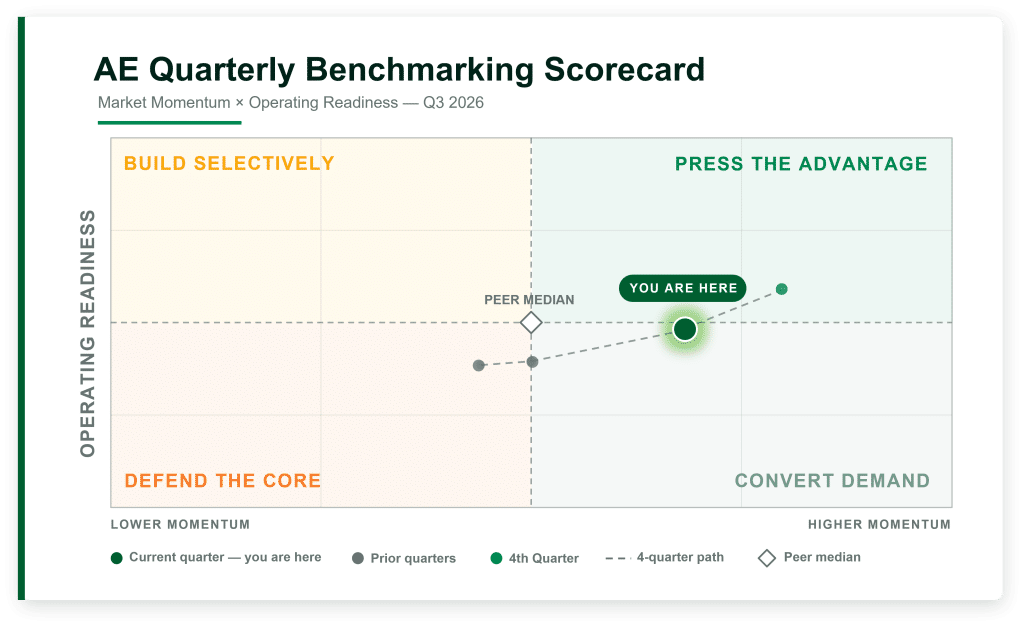
The survey will remain open through July 30.
Market Snapshot: 2026 Construction Forecast Softens
Weekly market intelligence for AE and environmental industry leaders.
Economists and construction industry experts surveyed by the American Institute of Architects (AIA) have downgraded their outlook for the value of U.S. nonresidential construction put-in-place in 2026. While the AIA Consensus Construction Forecast Panel projected a 1.0% spending rise at the start of the year, the mid-year update released last week forecasted a 0.3% decline in 2026 due to pressure from high interest rates, persistent inflation, workforce constraints, higher tariffs, and geopolitical disruptions.
Forecasters, however, brightened their 2027 prospects. The panel projects a 3.0% bump in the value of U.S. nonresidential construction next year after predicting a 2.2% rise back in January.
The panel kept its expectations for the institutional sector steady—with projected increases of 2.8% in 2026 and 2.7% in 2027—while substantially upgrading its forecast for the amusement and recreation category from a 1.3% boost at the start of the year to 7.1%. On the flip side, forecasters lowered their projections for health care construction spending growth from 4.6% in January to 2.6%.
The panel has grown more bullish about the outlook for commercial construction. After projecting a 3.0% jump in January, it now foresees rises of 4.8% in 2026 and 5.8% in 2027. Most of that growth is propelled by data center construction, which is projected to skyrocket 33.0% in 2026. (Excluding data centers from the commercial construction category, the panel would forecast a 1.0% decline in 2026.)
The largest downward revision came in manufacturing construction. At the start of the year, the panel projected a 3.9% fall in 2026. It now expects an 11.6% drop before tempering to a 0.6% decrease in 2027.
Looking beyond nonresidential construction spending, Dodge Construction Network’s data on construction starts and planning activity through the first half of the year paint a more optimistic picture. Propelled by a 33.8% surge in nonbuilding projects, year-to-date construction starts climbed 11.1% through the first six months of the year. Meanwhile, the Dodge Momentum Index—based on the three-month moving value of nonresidential building projects entering the planning stage—rose 21.8% through June 2026 compared to the first half of 2025.
“Residential and institutional construction remain weak,” says Dodge Construction Network Director of Economic Research Sarah Martin, “while commercial, industrial and nonbuilding construction continue to show strong year-to-date growth.”
For questions about our market intelligence and research services, contact Rafael Barbosa.
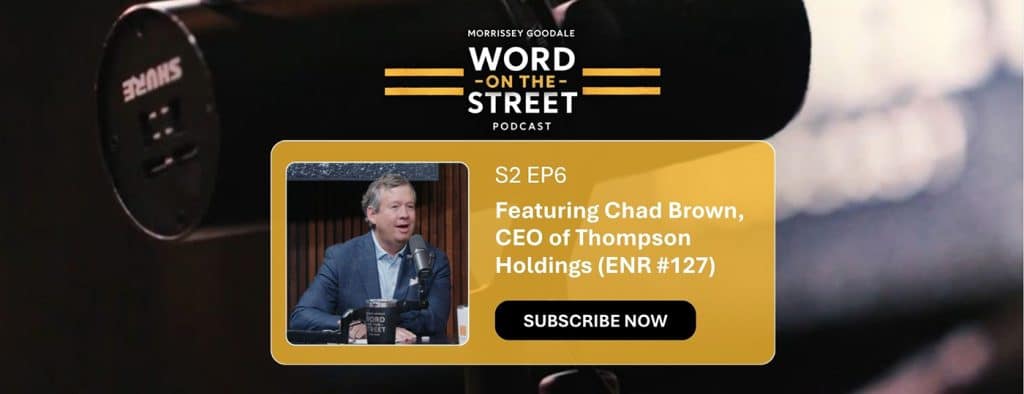
Word on the Street Podcast Spotlight
Weekly M&A Round Up
Deal activity stays strong with 16 transactions announced last week: M&A activity continued at a steady pace, with 16 transactions reported across domestic and international markets. In the U.S., 11 deals were announced spanning PA, MN, NY, WI, UT, MD, MA, OH, and LA. Internationally, five transactions were reported across Ireland, Canada, and the UK. Check out all of the week’s M&A news here.

The M&A and Capitalization Symposium
Learn what’s new (and next) in the world of AE M&A and Capitalization, make valuable new connections with industry leaders, and gain practical insights at the Post Oak Hotel at Uptown, Houston, TX.

The Top 5 M&A Questions CEOs Are Asking in 2026
Explore the five critical questions driving M&A strategy, valuation, and ownership decisions across the AE industry in 2026—and gain the answers and insights you need to make smarter M&A decisions.
Keep Up to Date with
Industry Insights
Stay up-to-date in real-time.